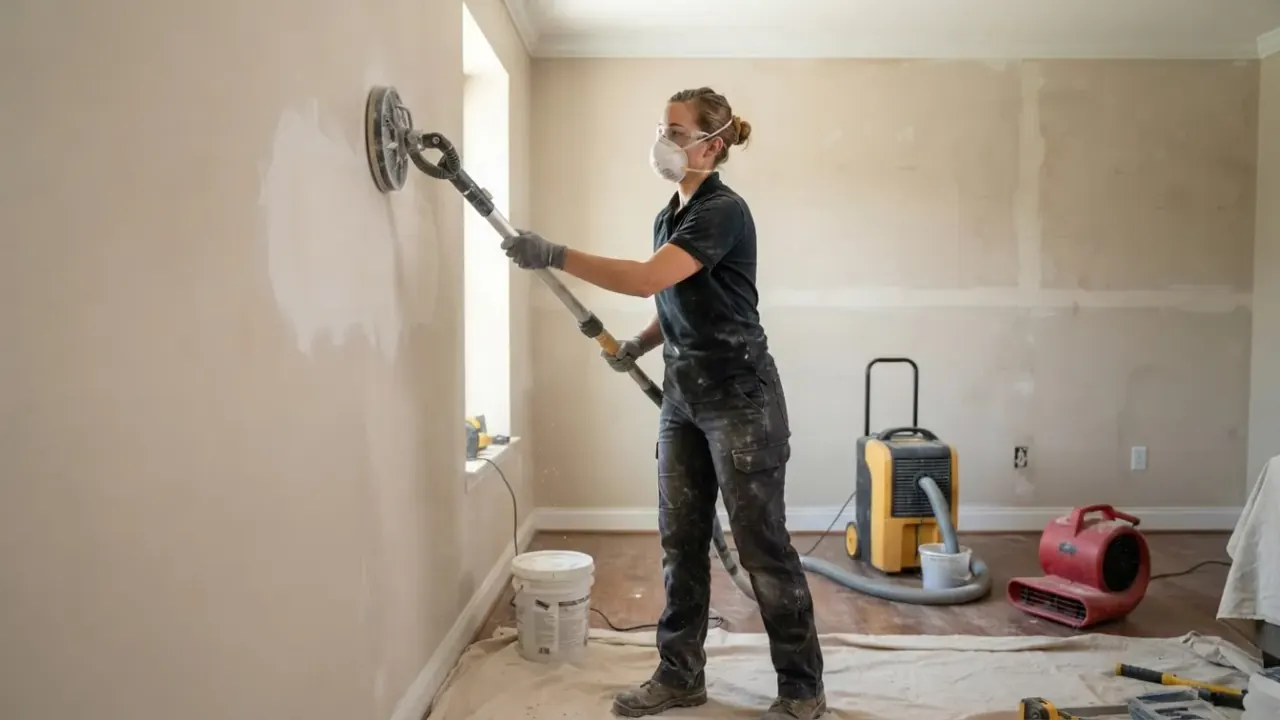
Moisture Mapping and Inspection
We run a moisture meter and thermal imaging camera across the affected wall and ceiling, and use a boroscope inside the cavity when needed. This tells us the true wet zone so we cut only what is ruined.
Every job starts with finding the moisture and ends with a finished wall. The scope depends on how far the water traveled, but here is what our standard water damaged drywall repair covers. If we find something extra, like a hidden leak or mold behind the panel, we show you before we add it.
We run a moisture meter and thermal imaging camera across the affected wall and ceiling, and use a boroscope inside the cavity when needed. This tells us the true wet zone so we cut only what is ruined.
We cut out soft drywall, stained panels, and saturated insulation with a drywall saw and utility knife. Plastic sheeting contains dust, and we haul the debris away the same day.
A dehumidifier and air movers run until a hygrometer confirms the framing is dry, usually 24 to 72 hours. We check readings daily and do not close the wall early.
We inspect the cavity for hidden mold growth and treat affected framing before the new panel goes up. If the growth is extensive, we bring in our mold remediation process and containment.
New mold-resistant drywall goes up with drywall screws, tape at the seams, and corner bead where needed. Joint compound is applied in thin coats, sanded smooth, then primed with a primer sealer and textured to match.
Before we leave, you get a walkthrough, a final moisture reading, and a workmanship warranty. We also tell you what to watch for over the next few weeks, like new stains or a musty odor.
Water Damaged Drywall Repair in rockwall is the process of locating the moisture source, drying the wall cavity, cutting out ruined drywall, and rebuilding the surface so it is sound, flat, and paintable. We use a moisture meter and a thermal imaging camera to map exactly how far the water traveled, because water wicks sideways through paper-faced panels and insulation far past the visible stain. Then we remove what cannot be saved and rebuild what can.
Rockwall sits on the east side of Lake Ray Hubbard, and that lake effect drives the humidity swings that make wet drywall repair rockwall such a common call. A slow supply-line drip behind a kitchen wall, a water heater pan that overflows in the attic, or a roof flashing leak after a spring storm all push moisture into the same paper and gypsum. Left alone, that moisture feeds hidden mold growth within 24 to 48 hours.
Every job follows the same five steps, whether it is one wall in a Stone Creek bathroom or a whole ceiling in The Harbor. Here is exactly what happens from the first call to the final walkthrough.
Schedule
Call or book online — a real human picks up and confirms a 2-hour arrival window.
Diagnose
Licensed tech inspects on-site, then walks you through the cause and your options.
Fix
The job is completed to code and done right the first time — no shortcuts, no surprises.
Guarantee
Every job backed by a written workmanship warranty — and we stand behind it.
Moisture meter and hygrometer
We use these to measure moisture content in drywall, wood framing, and the air. They tell us where the wet zone ends and when the cavity is dry enough to close.
Thermal imaging camera
This shows temperature differences behind the wall, which reveals hidden moisture and leak paths that a visual inspection would miss. It is how we find the true edge of the damage.
Boroscope
A small camera on a flexible probe lets us look inside the wall cavity without cutting a large opening. We use it to check insulation, framing, and for hidden mold growth.
Dehumidifier and air mover
These pull moisture out of the stud bay and move air across wet surfaces. We run them for 24 to 72 hours and verify results with a hygrometer before rebuilding.
Drywall saw, joint knife, and drywall sander
Our cut-out and finishing tools. The saw opens the wall cleanly, the joint knife spreads compound in thin coats, and the sander leaves a smooth, paintable surface.
Stud finder
We locate framing before we cut, so we can screw new panels into solid wood and avoid hitting wiring or plumbing inside the wall.
IICRC S500 drying standard
We follow the IICRC S500 standard for water damage restoration, which sets the moisture targets for drywall, wood, and air. That is why we dry to a reading instead of a calendar date, and why our repairs do not bubble later.
Mold-resistant rebuild
On walls that have been wet, we install mold-resistant drywall and replace saturated insulation. We tape seams with FibaFuse or mesh tape and seal with a primer sealer before texture and paint.
Level 4 finish
Our finishing standard for repaired walls and ceilings. Joint compound goes on in thin coats, sanded between passes, so the surface is flat and ready for primer under normal lighting.
EPA Lead-Safe work practices
In older Rockwall homes, painted drywall may contain lead. Our EPA Lead-Safe certification means we test before we cut and contain dust properly when lead is present.
01
What we do: We cut out the saturated ceiling drywall, dry the joists and insulation with a dehumidifier and air movers, then rebuild the ceiling with mold-resistant drywall and a matching texture.
→ The ceiling is flat, dry, and painted within three days, and the moisture readings confirm the framing is below the mold threshold.
02
What we do: We map the wet zone with a thermal imaging camera, remove the lower section of drywall, dry the bottom plate and studs, and rebuild the wall to a paintable finish.
→ The wall is sound and dry, and you avoid a full-room remodel because we caught it before the mold spread.
03
What we do: We extract standing water, cut out the wet drywall, set drying equipment, and rebuild with new panels and a stain-sealing primer.
→ The entryway is back to normal in two days, with no musty odor and no recurring stain.
04
What we do: We open the wall, dry the cavity, treat any mold growth, replace the insulation, and rebuild the drywall with a Level 4 finish.
→ The bathroom wall looks original again, and the moisture reading confirms the repair is dry behind the paint.
Rockwall's position on Lake Ray Hubbard keeps humidity higher than most of the Dallas area, and that changes how we dry walls. We see more slow leaks that stay hidden for weeks, because the paper facing stays damp longer. Summer storms push water under doors and through roof flashing, and winter freezes crack supply lines in attics and exterior walls. Most homes here are slab-on-grade with wood framing, so water travels along the bottom plate and wicks up the drywall. We follow Texas building code for fire-rated assemblies, and we rebuild garage separation walls to spec. If you need water damaged drywall fix rockwall TX work done right, we dry to a reading, not a guess. Rockwall County permits and inspections are straightforward, and we handle the paperwork when a permit is required.
Chandlers Landing
Many homes here have mature landscaping and irrigation lines close to the foundation. A slow irrigation leak can soak a wall for weeks before a stain shows up inside.
The Harbor
Condos and townhomes share walls, so a leak in one unit can wet the neighbor's drywall. We check both sides of a shared wall before we call the job done.
Rockwall Lakefront
Lakefront homes take wind-driven rain on exterior walls. We often find water staining on the inside face of walls facing the water after a strong storm.
Stone Creek
Two-story homes here put upstairs bathrooms directly over downstairs ceilings. A failed toilet seal or supply line shows up as a ceiling stain below.
Downtown Rockwall
Older homes have original plumbing and painted drywall that may contain lead. We test before we cut and follow EPA Lead-Safe practices.
High lake humidity most of the year
Drywall stays damp longer after a leak, so we extend drying time and verify with a hygrometer before closing the wall. Rushing this step is how repairs fail.
Spring and fall storm flooding
Wind-driven rain gets under doors and through flashing. We see clusters of calls after big storms, and we prioritize active leaks to stop the spread.
Winter freeze events
Pipes in attics and exterior walls crack when temperatures drop. We handle the drywall side after the plumber repairs the line, and we dry the cavity before rebuilding.
Slab-on-grade construction
Water travels along the slab and wicks up the bottom of the drywall. We always check the bottom plate and the first 12 inches of wall, even when the stain is higher.
Water leaves clues before it leaves damage. If you know what to look for, you can call us before the repair gets expensive. Here are the problems we see most often around Rockwall County.
Problem
Paint bubbles when moisture pushes from behind the wall. Ignore it and the gypsum core softens, the panel sags, and the repair grows from a patch to a full wall replacement.
Our Fix
We find the source, cut out the bubbled section, dry the cavity, and rebuild with new drywall and a primer sealer. The finish is textured to match, so you do not see the repair line.
Problem
A stain that returns after painting means the moisture source is still active. Each wet-dry cycle weakens the drywall and feeds mold growth behind the paper facing.
Our Fix
We trace the leak with a moisture meter and thermal imaging camera, fix the wet zone, then seal the stain with Kilz primer sealer before texture and paint. No bleed-through, no repeat.
Problem
Soft drywall means the gypsum core has already failed. It will not hold screws, it crumbles when touched, and it is a prime spot for hidden mold growth and a musty odor.
Our Fix
We remove the soft section up to sound material, dry the bottom plate and studs, replace any wet insulation, and install new mold-resistant drywall. We check the framing with a hygrometer before closing.
Problem
A sagging ceiling is holding water and can drop without warning. It also hides wet joists and insulation that will stay damp and grow mold long after the drywall is replaced.
Our Fix
We cut out the sagging area, dry the joists and insulation, and rebuild the ceiling with a texture match. We confirm the joists are dry before the new panel goes up.
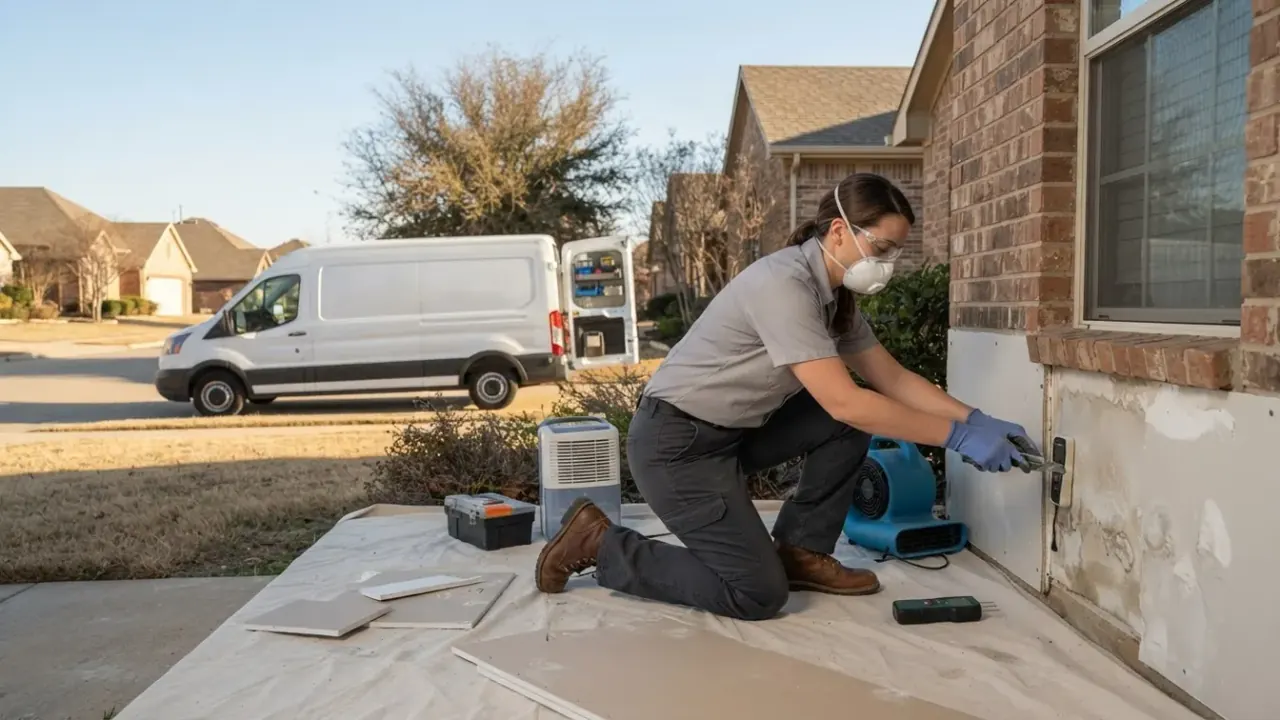
Water damage never stays put. It spreads through the paper facing, softens the gypsum core, and starts growing mold in the dark. Here is what you get when you let our crew handle it.
Dry Cavity, Not Just Dry Paint
We do not paint over a wet wall. Our dehumidifier and air mover setup pulls moisture out of the stud bay until a hygrometer reads below 16 percent on the wood. That is the number that stops mold growth and keeps your repair from bubbling six months later.
Same-Day Emergency Response
Emergency water damaged drywall repair rockwall TX calls get priority. When a pipe lets go at 2 a.m. or a storm pushes water under a door, we can be on site to stop the spread, cut out the soaked section, and set drying equipment the same day.
Mold-Resistant Rebuild
We rebuild with mold-resistant drywall, FibaFuse tape, and Kilz primer sealer on wet-prone walls. That combination gives you a surface that resists the next leak and cleans up easier. We also replace any saturated insulation before the new panel goes up.
Clean, Paintable Finish
Our drywall sander and joint knife work leaves a Level 4 finish ready for primer and paint. You get straight corners, no visible seams, and a texture match to the rest of the room. Most single-wall repairs are done in one visit.
Google ★★★★★4.9
Called about a wet wall in our hallway and they came out the same afternoon. The tech used a moisture meter and a camera to show me exactly how far the water had spread. They dried it for two days and rebuilt the wall. Honest pricing and no surprises.
Yelp ★★★★★4.8
We had a ceiling stain that kept coming back after painting. Drywall Masters found the leak source, fixed the drywall properly, and sealed the stain. It has not returned. They also replaced the wet insulation, which the last guy skipped.
BBB ★★★★★4.9
Professional from the first call. They explained the drying process, checked readings daily, and did not close the wall until it was dry. The texture match on our Stone Creek ceiling is perfect. I would use them again without hesitation.
Google ★★★★★5.0
A pipe burst in our attic over a weekend and soaked the ceiling. They were out fast, cut out the damage, and set drying equipment. The whole repair took three days and the ceiling looks brand new. Fair price for emergency work.
Real answers to the questions we hear most often from local homeowners and property managers.
When a pipe bursts or a storm pushes water inside, this is the call that stops the damage from spreading. We tarp, extract, cut out soaked drywall, and start drying the same day so mold does not get a foothold in your Rockwall home.
View Emergency Water Damage Drywall RestorationNot every stain means replacement. We use a moisture meter, thermal imaging camera, and boroscope to find the true wet zone and tell you whether repair or replacement is the right call. You get a written scope and a straight answer.
View Drywall Water Damage Assessment and InspectionCeilings take water from above, which means attic lines, roof leaks, and upstairs bathrooms. We cut out the sagging section, dry the joists, and rebuild with a texture match so the repair disappears into the ceiling plane.
View Ceiling Water Damage RepairWalls wick water sideways through the paper facing, so the stain is always smaller than the damage. We map the wet zone, remove what is ruined, dry the studs, and rebuild the wall to a paintable finish.
View Wall Water Damage RepairBrown rings and yellow streaks do not come out with paint alone. We seal the stain with a primer sealer, then texture and paint so it does not bleed through. This is often the last step of a larger water damage repair.
View Drywall Water Stain Removal and SealingWhen drywall is soft, sagging, or moldy, replacement is the only durable fix. We remove the ruined panels, replace saturated insulation, and hang new mold-resistant drywall with a Level 4 finish.
View Water Damaged Drywall ReplacementCall, text, or send us a message and we will get a technician out to meter the wall and quote the repair. Same-day estimates are standard, and emergency calls get answered around the clock. If you are dealing with an active leak, tell us on the phone so we can bring drying equipment on the first trip.
Phone
9728844781Address
1375 Mims Rd, Rockwall, TX 75032
Hours
Mon–Fri: 7AM – 7PM
Sat: 8AM – 4PM
Sun: Emergency Only
24/7 Emergency Available