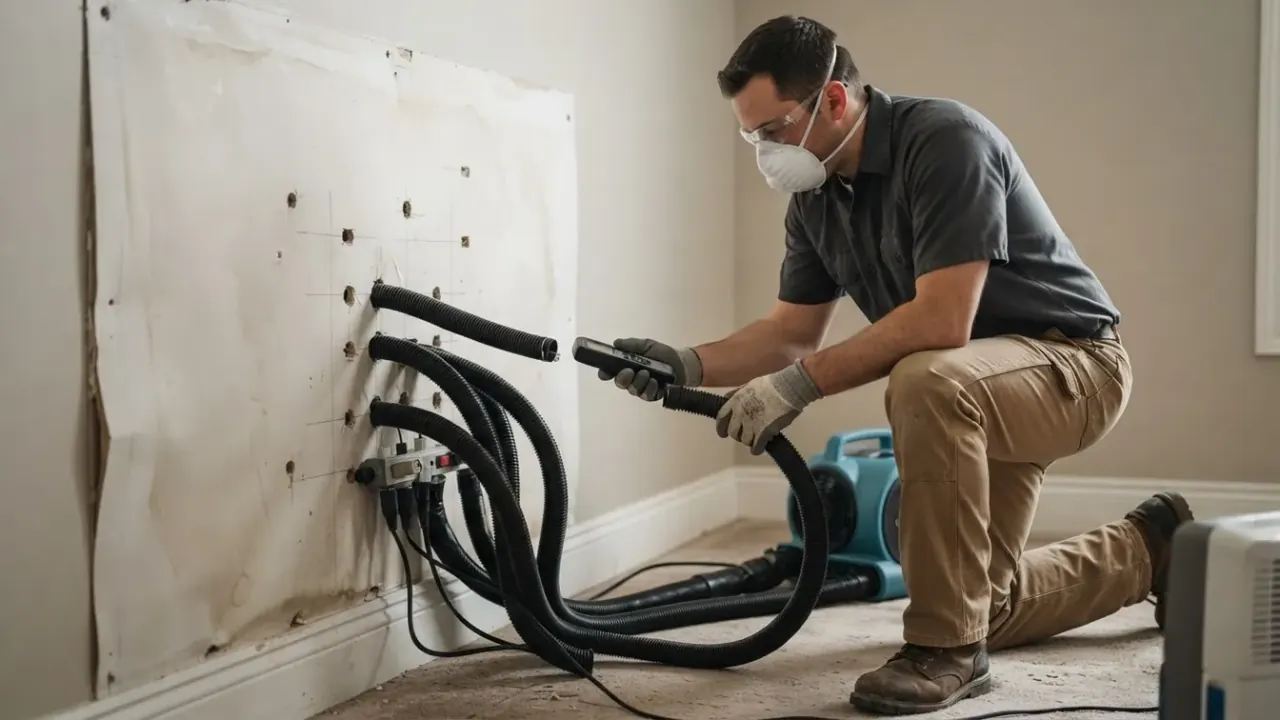
Moisture Mapping
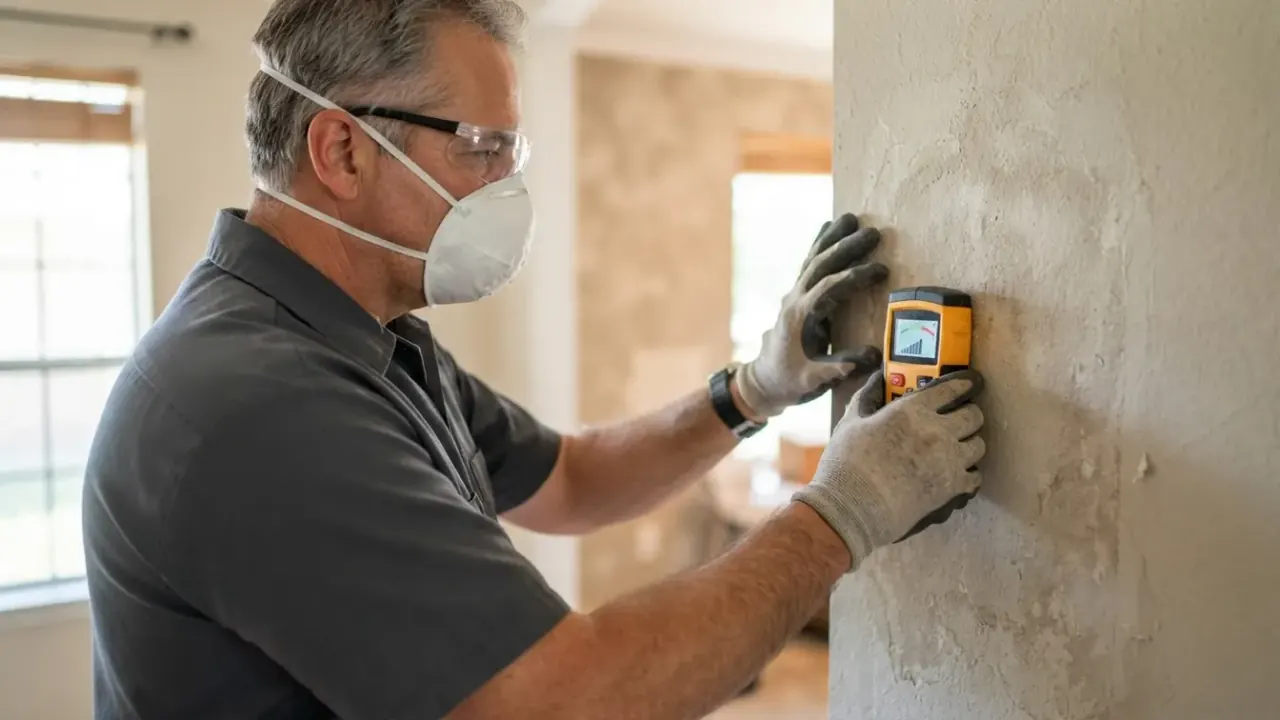
We use a moisture meter, thermal imaging camera, and hygrometer to map the wet zone in your walls and ceilings. You get a marked boundary and a written reading log, so there's no guesswork about what's wet and what isn't.
Every drying job starts with a full moisture assessment and ends with verified dry readings. Here's what's covered in a standard drywall drying and dehumidification rockwall TX scope, and what we handle as an add-on when the damage calls for it.
We use a moisture meter, thermal imaging camera, and hygrometer to map the wet zone in your walls and ceilings. You get a marked boundary and a written reading log, so there's no guesswork about what's wet and what isn't.
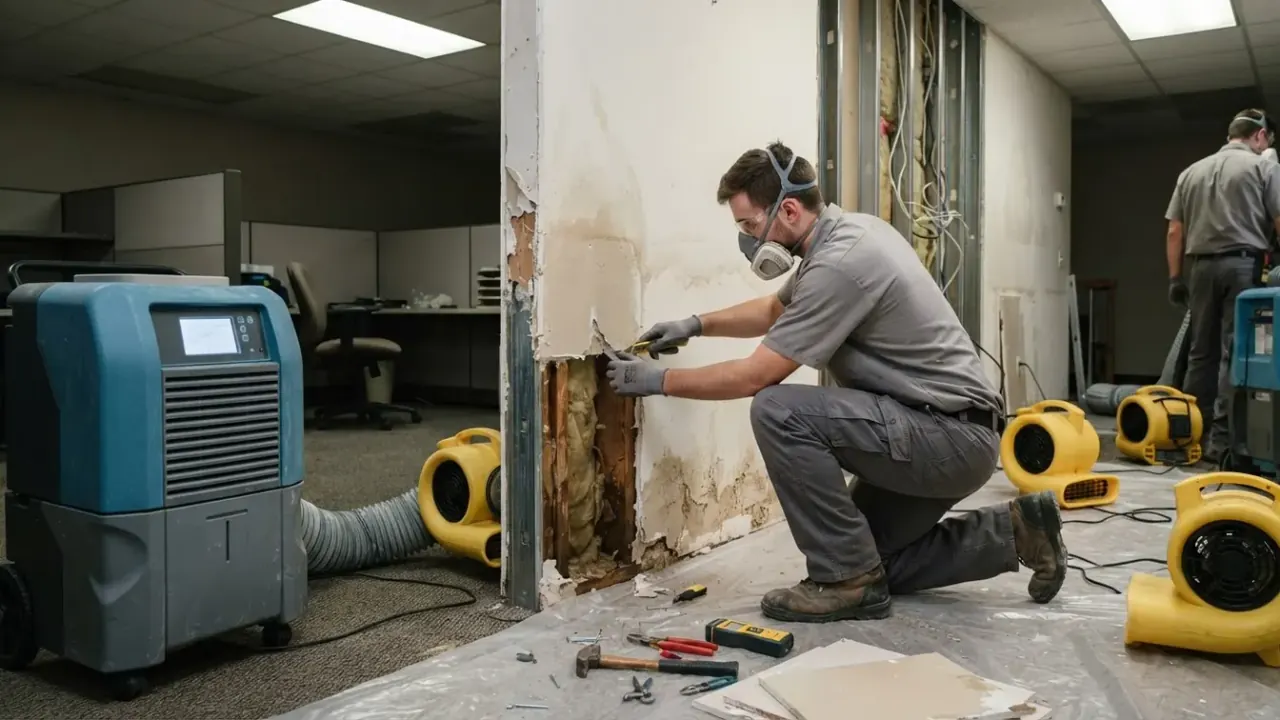
We set commercial-grade dehumidifiers and air movers sized to the affected square footage. Equipment runs continuously, and we adjust placement daily based on hygrometer readings so corners and baseboards dry at the same rate as open wall.
A technician returns each day to log readings on drywall, joint compound, and framing. If a section stalls, we investigate for a second leak, blocked airflow, or saturated insulation rather than just letting the equipment run longer.
We keep indoor humidity below 50 percent during drying and apply an antimicrobial treatment to framing where water traveled. If we find hidden mold growth, we switch to full containment and remediation protocols before finishing.
Before we pull equipment, we do a final moisture meter pass and check for drywall bubbling, peeling, water stains, and musty odor. You get the closing readings in writing, which is exactly what your insurance adjuster needs to close the claim.
Drywall drying and dehumidification rockwall TX is the controlled process of removing trapped moisture from drywall panels, joint compound, paper tape, and the framing behind them. Water wicks upward through gypsum and sideways along seams, so the wet spot you see is usually smaller than the wet zone you don't. We map that zone with a moisture meter and thermal imaging camera, then run commercial dehumidifiers and air movers until readings match a dry standard. Skipping this step traps water inside the wall cavity.
Rockwall sits on the east side of Lake Ray Hubbard, and that lake effect keeps humidity high most of the year. Add slab-on-grade construction and quick temperature swings in fall and spring, and you get condensation, slow supply-line drips, and storm-driven water that soaks into walls fast. Homeowners in Stone Creek and Lakeside Village call us most often after a water heater failure or a roof leak. If you're wondering how to dry out water damaged drywall in rockwall, the answer is fast extraction plus measured drying, not a fan pointed at the wall.
Every job follows the same measured sequence. You'll know what's happening, how long it takes, and what we're watching for at each stage.
Schedule
Call or book online — a real human picks up and confirms a 2-hour arrival window.
Diagnose
Licensed tech inspects on-site, then walks you through the cause and your options.
Fix
The job is completed to code and done right the first time — no shortcuts, no surprises.
Guarantee
Every job backed by a written workmanship warranty — and we stand behind it.
Moisture Meter
Pin and pinless meters read moisture content inside drywall panels and framing. We use them to set the drying boundary and to confirm when the wall hits the dry standard.
Thermal Imaging Camera
Infrared imaging shows temperature differences that reveal where water traveled behind intact drywall. It's how we find the wet zone without cutting exploratory holes in every wall.
Commercial Dehumidifier
LGR dehumidifiers pull moisture out of the air so wet drywall can release its water. We size units to the room volume and run them continuously until humidity drops below 50 percent.
Air Mover
High-velocity air movers create a vortex across the wall surface and into access ports. Directed airflow is what actually dries the paper, joint compound, and framing behind the panel.
Hygrometer
We track relative humidity and temperature in the drying chamber. If humidity climbs, we add equipment or adjust airflow rather than letting the job stall.
Boroscope
A boroscope lets us look inside the wall cavity through a small hole. We check insulation, framing, and the back of the drywall for moisture and hidden mold growth.
Drywall Saw and Joint Knife
When a panel has to come out, we cut clean openings with a drywall saw and finish edges with a joint knife. Clean cuts make the later repair faster and cheaper.
IICRC S500 Drying Standard
We follow the IICRC S500 standard for water damage restoration, which sets the dry standard and the documentation requirements. It's the same benchmark insurance adjusters use to evaluate whether a drying job was done correctly.
Closed Drying Chamber
We close off the affected rooms to concentrate dehumidification where it's needed. That keeps humid outdoor air from re-wetting the walls, which matters in Rockwall where lake humidity stays high most of the year.
Daily Psychrometric Monitoring
We log temperature, relative humidity, and moisture content daily and adjust the equipment plan based on the numbers. Drying isn't a set-it-and-forget-it job. The readings tell us when to add airflow or when to stop.
Mold-Resistant Rebuild
When panels must be replaced, we use mold-resistant drywall and proper vapor control in wet-prone areas such as bathrooms and laundry rooms. It's a small upgrade that pays off the next time water gets loose.
01
What we do: We extract standing water, cut a small access port, and run dehumidifiers and air movers on both sides of the wall. Daily readings tell us whether the shared panel dries in place or needs replacement.
→ Most shared-wall water heater leaks dry in three days with one panel replaced at most. You avoid tearing out the whole hallway.
02
What we do: We dry the sill area and wall cavity, check the insulation with a boroscope, and treat the framing. If the window seal failed, we flag it so the leak doesn't repeat next storm season.
→ The wall dries without a full replacement, and you get a clear note on the window issue for your next repair.
03
What we do: We map the ceiling with a moisture meter, support any sagging panel, and dry the cavity from below. Readings are logged daily until the ceiling hits the dry standard.
→ The ceiling dries in two to four days, and we patch the stain and texture after sealing with a primer sealer.
04
What we do: We dry the base of the wall and the framing, monitor with a hygrometer, and coordinate with your plumber once the leak is repaired. Drying continues until readings stabilize.
→ You avoid replacing the bottom two feet of drywall in every affected room, which is the usual outcome when slab leaks go undried.
Rockwall's position on Lake Ray Hubbard keeps outdoor humidity high, and that changes how we dry walls here. A wall that would dry in two days in a drier climate can take three or four in Rockwall if the drying chamber isn't sealed properly. Most homes in the area are slab-on-grade, so water from a slab leak or a failed supply line wicks up through the baseplate and into the bottom of the drywall. We plan for that by drying low and monitoring the base of the wall separately. Storm season in spring and fall brings wind-driven rain through window frames and roof penetrations, and those leaks often show up as ceiling stains weeks later. If you need drywall water removal and drying rockwall service after a storm, call us the same day. We also handle drywall drying and dehumidification cost rockwall TX questions upfront so you know the scope before equipment goes in.
The Harbor
Waterfront condos and townhomes here see more humidity-driven wall moisture. We seal the drying chamber tightly and run dehumidifiers longer to compensate for the lake air.
Chandlers Landing
Older homes with mature landscaping often have slab leaks and irrigation-line failures. We dry the base of the wall and check the framing with a boroscope before closing up.
Stone Creek
Newer construction with tight wall assemblies. When water gets in, it spreads through the cavity quickly, so we map the wet zone with thermal imaging before setting equipment.
Shoreline Estates
Lakefront properties deal with wind-driven rain during storms. We check window frames and roof penetrations for the source so the leak doesn't return after drying.
Ridge Road Area
A mix of older and newer homes on varied elevations. Drainage issues after heavy rain push water against foundations, and we see moisture wicking into lower wall sections.
High lake humidity most of the year
Outdoor humidity slows drying and can re-wet walls if the drying chamber isn't sealed. We run dehumidifiers longer and monitor hygrometer readings daily to hit the dry standard.
Slab-on-grade construction throughout Rockwall
Water from slab leaks and supply-line failures wicks up into the baseplate and lower drywall. We dry low, check the framing, and watch the base of the wall separately from the open panel.
Spring and fall storm seasons
Wind-driven rain finds window frames and roof penetrations, and the resulting leaks often show up as ceiling stains later. We trace the source so drying solves the problem, not just the symptom.
Rapid temperature swings in fall and spring
Condensation forms inside walls when warm indoor air meets a cool exterior surface. We check for condensation-driven moisture in addition to the original leak.
Most of the expensive damage we see in Rockwall started as a small leak nobody dried properly. Here are the problems we solve before they turn into a full wall replacement.
Problem
Water wicks sideways and down inside the wall cavity, so the visible stain is often a fraction of the wet area. Untreated, it feeds hidden mold growth and rots the framing.
Our Fix
We map the full wet zone with a thermal imaging camera and moisture meter, then dry the cavity with directed airflow. You see the readings before and after, so you know the wall is actually dry, not just dry to the touch.
Problem
A musty smell usually means microbial growth is already active on the paper backing of the drywall or in the insulation. Painting over it traps the odor and the problem inside the wall.
Our Fix
We find the source with a boroscope, dry the assembly, and treat affected framing. If mold is established, we contain the area and remove the affected material. The odor goes away because the moisture source is gone.
Problem
Sagging ceiling panels can drop without warning and often mean the framing above is still wet. Ignoring it risks a collapse and a much larger repair.
Our Fix
We support the panel, dry the ceiling cavity from below, and check the framing with a moisture meter. If the panel is too far gone, we remove and replace it after the structure passes a dry check.
Problem
Cracks from water damage reappear when the wall is patched before it's fully dry. The joint compound shrinks as it cures, opening the seam again.
Our Fix
We dry the wall to the dry standard first, then repair with paper tape and joint compound. That sequence is why our repairs hold through the next humid Rockwall summer instead of cracking again in a month.
Water damage gets worse by the hour. Here's what you gain when you call us before the panels soften and the odor sets in.
Save the Drywall
Most water-damaged drywall can be dried in place if you catch it within 24 to 48 hours. We use moisture meters and hygrometers to confirm the panels and framing are back to a dry standard, so you avoid tearing out and replacing full sheets. That alone can cut your repair bill by hundreds of dollars.
Stop Hidden Mold
Mold can colonize a wet wall cavity in 24 to 72 hours. Our drywall dehumidification near me rockwall service drops the ambient humidity below 50 percent and keeps air moving behind the panels. If we find hidden mold growth during the inspection, we switch to mold remediation protocols so the problem doesn't come back after the paint dries.
Protect Structural Framing
Soft drywall is a warning sign, but sagging panels and cracks from water damage mean the studs behind them are staying wet too. We dry the framing with directed airflow and check it with a boroscope before closing anything up. Keeping the lumber dry protects the load path of your wall and prevents long-term sag.
Document for Insurance
We log moisture readings, take photos of water stains and drywall bubbling, and note the equipment run times. That documentation gives your adjuster a clear picture of the loss and the drying work performed. It makes the claim smoother and helps justify the cost of professional drying over a DIY fan setup.
Google ★★★★★4.9
Called after a pipe burst in our wall. They showed up within two hours, set up dehumidifiers and air movers, and checked readings every day. Saved most of the drywall and gave us the paperwork for insurance. Straightforward pricing, no surprises.
Yelp ★★★★★4.8
We had a slab leak in Chandlers Landing and were told the bottom of every wall needed to come out. Drywall Masters dried it instead. Three days of equipment and one small patch. They knew exactly what they were doing.
BBB ★★★★★5.0
Professional from the first call. They explained the drying process, showed us the moisture readings, and didn't try to sell us anything we didn't need. The musty smell in our hallway is gone and the wall looks like nothing happened.
Google ★★★★★4.9
Storm pushed water through our window frame and soaked the drywall below. They dried the wall, replaced the insulation, and sealed the stain. Quick, clean, and they cleaned up after themselves. Would call again.
We work on water-damaged drywall every week in Rockwall County, from slab leaks in Chandlers Landing to storm intrusion along the Highway 66 Corridor. Our technicians are trained to IICRC drying standards and carry EPA Lead-Safe certification for work in older homes. We know how USG Sheetrock and Georgia-Pacific panels behave when they get wet, and we know which wall assemblies in this area dry quickly versus which ones trap moisture. That local pattern recognition is why we can usually tell you on day one whether your drywall will dry in place or needs replacement.
Real answers to the questions we hear most often from local homeowners and property managers.
Once drying is complete, we repair popped tape, cracked joint compound, and blistered paint. Most Rockwall repairs are finished with USG Sheetrock panels and DAP joint compound so the patch blends with the existing wall.
View Water Damaged Drywall RepairFor burst pipes and storm intrusion, our emergency crew extracts water, sets drying equipment, and stabilizes the wall assembly. We run 24/7 across Rockwall County so the clock on mold growth starts as late as possible.
View Emergency Water Damage Drywall RestorationWe use a moisture meter, thermal imaging camera, and boroscope to map exactly how far water traveled. The inspection report tells you which panels can be dried and which need replacement before any work begins.
View Drywall Water Damage Assessment and InspectionCeiling drywall traps water from roof leaks and upstairs plumbing. We dry the panels from below with directed airflow, then repair sagging, water stains, and cracks once readings hit the dry standard.
View Ceiling Water Damage RepairWall cavities hold moisture longer than ceilings because airflow is restricted. We drill small access ports, dry the framing and insulation, then patch and finish the wall with mesh tape and joint compound.
View Wall Water Damage RepairBrown water stains bleed through paint unless you seal them first. We apply a primer sealer such as Kilz after drying, then repaint so the stain doesn't ghost back through the finish coat.
View Drywall Water Stain Removal and SealingCall, text, or send us a message and we will get a technician out to meter the wall and quote the repair. Same-day estimates are standard, and emergency calls get answered around the clock. If you are dealing with an active leak, tell us on the phone so we can bring drying equipment on the first trip.
Phone
9728844781Address
1375 Mims Rd, Rockwall, TX 75032
Hours
Mon–Fri: 7AM – 7PM
Sat: 8AM – 4PM
Sun: Emergency Only
24/7 Emergency Available