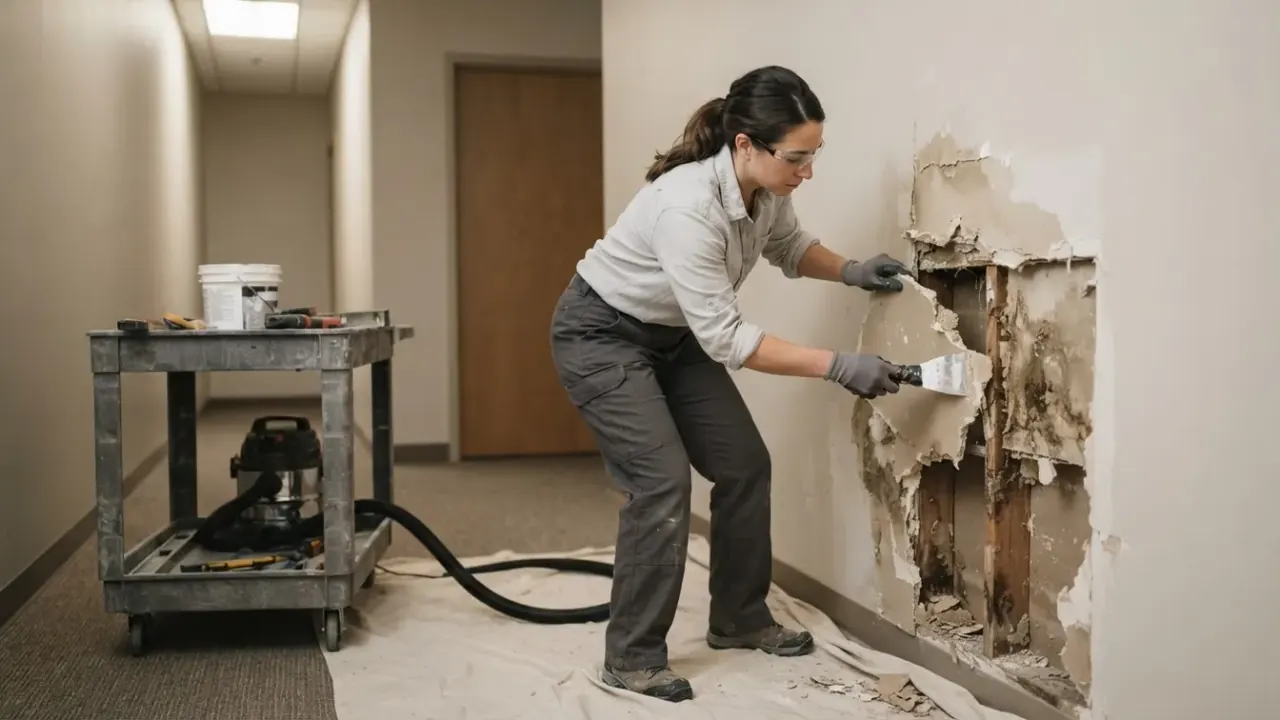
Water damage behind drywall is serious when the moisture has reached the framing, when the stain keeps growing after the leak stops, or when the wall stays soft and cool for more than 48 hours. A single brown ring under a bathroom supply line is usually a surface problem; a wall that bulges, smells like a wet basement, or crunches when you press it means water is sitting inside the cavity. This post walks through the exact signs we look for on calls across Rockwall, how to test a wall yourself in ten minutes, and the point where a repair turns into a restoration.
The short answer: when water damage behind drywall is serious
How to tell if water damage behind drywall is serious in Rockwall TX comes down to three questions: how long has the water been there, how far has it spread, and is the structure still wet. Drywall is a sponge wrapped in paper. Once the paper face stays damp past 24 to 48 hours, mold spores that were already dormant in the house begin colonizing the back of the board.
Serious water damage behind drywall in Rockwall almost always involves one of four sources: a slab or supply line leak, a roof or flashing failure, an AC condensate drain that clogged in July, or a slow tub overflow that soaked the same stud bay for months. The damage you see on the painted side is the last 10 percent of the story. The other 90 percent is inside the wall.
One definition worth keeping in your head: water damage behind drywall is a moisture intrusion event that has soaked the paper, gypsum core, or framing inside a wall cavity, and it is serious when the material cannot dry on its own within two days. If you are not sure which side of that line you are on, a drywall water damage inspection rockwall with a pin-type moisture meter settles it in about 20 minutes.
Signs of water damage behind drywall in Rockwall, Texas
Signs of water damage behind drywall in Rockwall, Texas, show up in a predictable order: smell first, texture second, visible staining third, and structural symptoms last. If you are already seeing the third or fourth stage, the water has been there a while.
What you can see
- Yellow-brown rings or a tea-colored halo that grows outward week over week.
- Paint that looks slightly darker in a patch, even when the wall feels dry to the touch.
- Hairline cracks that run horizontally along a seam, or a tape joint that has started to lift.
- Bubbling or blistering paint - that is water pushing the latex off the gypsum from behind.
- Baseboards that have separated from the wall, or a dark line along the bottom plate.
What you can feel and smell
- A wall that reads noticeably cooler than the drywall two feet away. Evaporating moisture pulls heat out of the surface.
- Softness when you press with a thumb. Good drywall feels like a hardback book cover; wet drywall feels like a cereal box left in the rain.
- A musty, wet-cardboard smell that gets stronger when the AC kicks on and the house pressurizes.
- Paint that crumbles or chalks onto your finger when you rub it.
Rockwall sits on heavy black clay soil that swells after every big rain and shrinks hard in August. That cycle opens slab penetrations and stresses supply lines under the slab, which is why we see a spike in hidden wall moisture in the weeks after a spring storm system and again in late summer when the soil pulls away from the foundation. Homes on the lake side of town deal with a second pattern: wind-driven rain finding its way behind siding and window trim. If you are in Rockwall Lakefront water damaged drywall repair territory, check the wall under every exterior window after a hard north wind.
How to test a wall yourself before you call anyone
You can narrow down a hidden leak in about ten minutes with tools you already own. None of this replaces a moisture meter, but it tells you whether you are dealing with a cosmetic stain or an active intrusion.
- Kill the water source. Shut off the fixture or the supply valve feeding that wall and dry the surface with a towel.
- Mark the stain. Trace the outer edge with a pencil and write today's date next to it.
- Press and listen. Push a thumb into the center of the stain. Soft, spongy, or crunchy means the core is compromised.
- Check the baseboard. Pull the bottom edge away from the wall with a putty knife. If the back of the baseboard is dark and damp, water is pooling at the bottom plate.
- Wait 48 hours. If the pencil line has moved, or the wall still feels cool, the leak is active or the cavity is still saturated.
One number matters more than any other here: drywall that stays above 20 percent moisture content for more than 48 hours is a mold risk. Normal interior drywall reads 8 to 12 percent. A pin meter from any hardware store costs $30 to $50 and will tell you exactly where you stand.
How do I know if water damage behind drywall is serious in Rockwall?
You know it is serious when the moisture has reached the studs, the bottom plate, or the insulation, because those materials hold water far longer than the drywall itself. Gypsum board dries in a day or two with air movement. A 2x4 stud soaked through takes a week or more, and the paper facing on insulation can stay damp for three weeks in a closed cavity.
Three conditions push a repair into restoration territory:
- Mold is visible or the smell is persistent. Surface mildew wipes off; black or green growth on the paper backing means the colony has rooted into the board.
- The wall has lost its shape. Sagging, bowing, or a ceiling that dips between joists means the board has absorbed enough water to fail structurally.
- The same spot has leaked before. Repeat moisture in one bay is the classic setup for rot in the bottom plate and sill.
If any of those three are true, drying alone will not fix it. The wet section has to come out, the cavity has to be dried and treated, and new board goes back in. That is a water damaged drywall repair rockwall TX job, not a paint job.
Common mistakes Rockwall homeowners make with wet drywall
The most expensive mistake we see is painting over a water stain. Stain-blocking primer hides the color but seals moisture against the gypsum, and the next thing you know the paint is peeling in sheets six months later.
Other repeat offenders:
- Running a box fan for an hour and calling it dry. Air movement helps, but a closed wall cavity needs a dehumidifier pulling the room below 50 percent relative humidity for at least 24 hours.
- Cutting out only the stained section. Water wicks sideways and down. The visible stain is usually 12 to 18 inches smaller than the actual wet zone.
- Ignoring the ceiling above the stain. Water travels along joists. A wall stain frequently means the real source is a ceiling water damage repair rockwall TX problem one floor up.
- Assuming insurance will not cover it. Most Texas homeowner policies cover sudden and accidental discharge - a burst supply line, a failed water heater - even when they exclude long-term seepage. Document with dated photos before you touch anything.
- Waiting for the smell to go away. It does not. It gets into the carpet, the pad, and the return air, and then you are paying for two problems.
What serious water damage costs to fix in 2026
Typical 2026 pricing in the Rockwall area runs $450 to $900 for a small cut-and-patch on one wall, $1,200 to $2,800 for a full stud-bay replacement with drying equipment, and $3,500 and up when mold remediation or ceiling work is involved. Those numbers include drying, removal, new board, texture, and paint matched to the existing wall.
What drives the price up fast:
- Number of stud bays affected. Each additional bay adds roughly $250 to $450.
- Whether insulation has to be replaced. Wet batt insulation almost always does.
- Ceiling access. Working overhead takes longer and needs more containment.
- Mold treatment. Encapsulation and HEPA scrubbing add $800 to $2,000 depending on square footage.
What keeps it cheap: catching it in the first 48 hours. A wall that is still at 15 percent moisture content can often be dried in place and sealed, which is a fraction of the cost of tearing it out. That is why we push same-day assessments - the difference between a $600 repair and a $4,000 restoration is usually measured in days, not weeks.
When to call a professional
Call us when the stain has grown after 48 hours, when the wall is soft or cool, when you smell mustiness that does not clear with ventilation, or when the leak came from above and you cannot see the full path. Those are the four conditions where DIY drying stops working.
Drywall Masters handles water damaged drywall repair across Rockwall and the surrounding lake communities. We find the source, meter the cavity, dry it, and put the wall back so the repair disappears into the existing texture. If the damage is fresh and active, our emergency water damage drywall restoration rockwall TX crew can be on site the same day to stop the spread before it reaches the framing. If mold has already set in, we handle that too with drywall mold removal rockwall before any new board goes up.
We work in every neighborhood here, from the older homes near Downtown Rockwall water damaged drywall repair where original plumbing is finally showing its age, to the newer builds out toward Stone Creek water damaged drywall repair where irrigation lines and slab movement cause most of the calls. Wherever you are, the process is the same: find it, dry it, fix it, and leave the wall looking like nothing happened.
Frequently Asked Questions
How do I know if water damage behind drywall is serious in Rockwall?
It is serious if the wall stays soft or cool for more than 48 hours, if the stain keeps growing, or if you smell persistent mustiness. Any of those three means moisture has reached the framing or insulation, and drying alone will not fix it.
What are the signs of hidden water damage in Rockwall TX?
Look for a wall that feels cooler than the surrounding drywall, a musty odor that strengthens when the AC runs, baseboards pulling away from the wall, and paint that bubbles or chalks. Visible stains are usually the last sign to appear, often weeks after the leak started.
Who can inspect water damage behind drywall near me in Rockwall?
A drywall and restoration contractor with a pin-type moisture meter can map the wet zone in about 20 minutes without cutting into the wall. Drywall Masters performs these assessments across Rockwall, usually the same day you call, and gives you a written scope before any work starts.
Can water damage behind drywall cause mold in Rockwall Texas?
Yes. Mold needs 24 to 48 hours of sustained moisture above 20 percent to colonize drywall paper, and Rockwall's summer humidity speeds that up. If the wall has been wet for a week or more, assume mold is present and treat the cavity before closing it back up.
How much does a drywall water damage inspection cost in Rockwall TX?
Most local assessments run $75 to $200, and many contractors credit that fee toward the repair if you hire them. We quote the inspection upfront and apply it to the job when you move forward with the fix.
Get help with water damaged drywall repair in rockwall
If your wall is soft, stained, or smells damp, the clock is already running. Call Drywall Masters at 972-884-4781 and we will meter the wall, find the source, and tell you straight whether it is a patch or a full restoration - usually the same day.